Hair
· 6 min read
Hair fall in winter usually comes from a mix of dry scalp, hot water, low vitamin D and iron, smog and tight woollen caps, and most of it eases once those habits are corrected. Losing 50 to 100 strands a day is normal. Clumps in the shower drain, a parting that keeps widening or shedding that runs past three months is not, and at that point a hair treatment in Gurgaon is a better use of your time than another shampoo. Mild cases respond to scalp care, enough protein and a few blood tests. Severe hair fall treatment, whether PRP or low level laser therapy, begins only after a specialist has found the cause. The causes come first, since the right fix depends on them.
Why hair falls more when the weather turns cold
Seasonal shedding is documented, and in many people it peaks in autumn. Hairs that enter the resting phase fall out about two to three months later (the pattern is called telogen effluvium), so a trigger in September can show up in your comb in December. Winter then adds its own problems.
- Cold outdoor air and indoor heaters pull moisture out of the scalp. You get itching, flaking and brittle hair that snaps close to the root, and part of what looks like hair fall is actually breakage.
- Very hot showers remove scalp oil faster than the scalp can replace it.
- Hard water, common in many Gurgaon households, leaves mineral residue on the hair shaft and makes it rough.
- Less sunlight and heavier, carb-heavy meals often mean low vitamin D, low ferritin (stored iron) and too little protein. These are the first values we ask you to check.
- Caps, scarves and hoods rub against the hairline and crown all day, and tight ones add tension.
- From November, smog in the NCR settles on the scalp, and many people wash less because the water is cold. Build-up and flaking inflame the follicle openings.
- Thyroid disorders, PCOS, a recent high fever, childbirth or crash dieting can each cause shedding that winter simply makes noticeable.
Winter shedding or something that needs a doctor?
The pattern tells you more than the amount. This is how we usually separate the two during a consultation.
| What you notice | Usually seasonal | Needs evaluation |
|---|---|---|
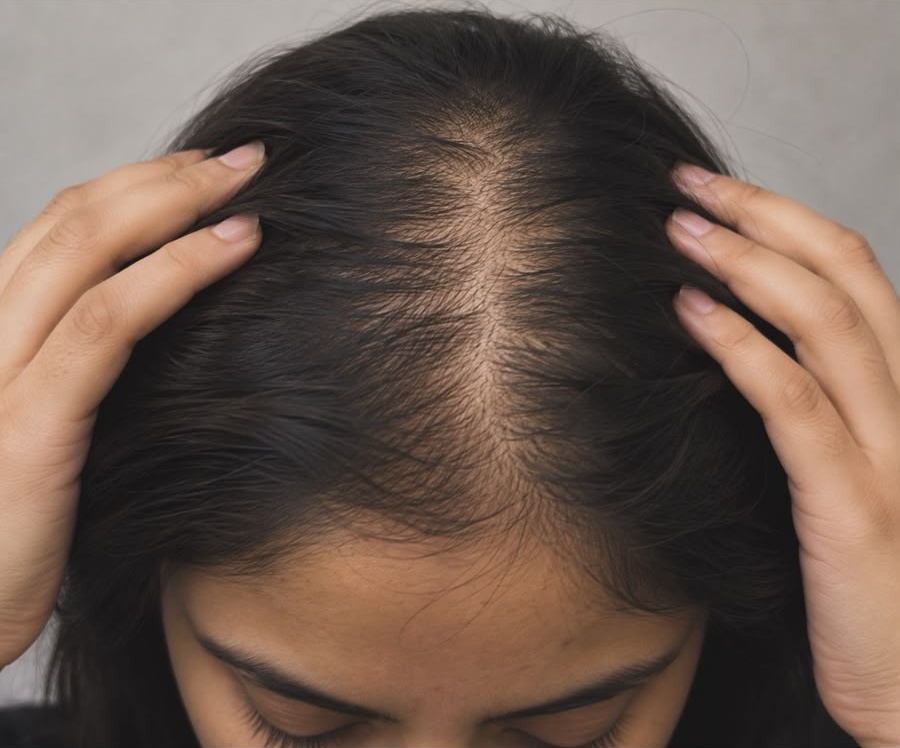
| Where the thinning is | Even across the whole scalp | Wider parting, receding temples, thin crown |
| How long it lasts | Eases over a couple of months once triggers are fixed | Continues beyond three months |
| Scalp condition | Dry, flaky, itchy | Red, painful or scaly patches, or smooth bald patches |
| The shed hairs | Normal thickness, small white bulb at the root | Short, fine hairs thinner than the rest |
Home fixes worth trying for four to six weeks
If you are asking what is the solution for hair fall that began with the cold, start with the scalp and your blood reports before you buy anything new.
- 1Wash in lukewarm water and finish with a cooler rinse. Two or three washes a week suit a dry scalp. Wash more often if you travel through traffic daily.
- 2Choose a mild shampoo. If flakes remain after two weeks, move to an anti-dandruff shampoo containing ketoconazole or zinc pyrithione, because an inflamed scalp sheds more.
- 3Oil the lengths of your hair and keep oil off a flaky scalp, since overnight oiling can worsen dandruff.
- 4Eat protein at every meal, such as dal, eggs, paneer, curd or sprouts, and pair iron-rich foods like spinach and rajma with something rich in vitamin C.
- 5Test before you supplement: haemoglobin, ferritin, vitamin D, B12 and TSH. Tell your doctor if you take biotin, which can distort some thyroid results.
- 6Keep caps loose, preferably with a cotton or satin lining. Don't tie wet hair tightly, and cut back on blow-dryers and straighteners.
Give it the full six weeks. Shedding that is still heavy after that is unlikely to respond to another oil or serum.
When hair fall counts as severe
No fixed number of strands defines severe hair fall. We look at duration, visibility and pattern, and we suggest a consultation if any of these applies to you:
- Shedding has continued for more than three months or is getting heavier
- Your parting looks wider, or the scalp shows through under normal light
- You have round bald patches, or hair came out in clumps
- Redness, burning, pain or scaling on the scalp has not cleared
- The loss began two to three months after a high fever, surgery, childbirth or a crash diet
- Your parents or siblings have pattern hair loss
Pattern hair loss progresses, and follicles that stay miniaturised for years respond less to any treatment. An early assessment usually keeps more options open. A proper severe hair fall treatment plan is built on a scalp examination and blood tests, not on a package picked from a price list.
How we treat hair loss once the cause is clear
At Qilume Aesthetics, our approach to hair treatment in Gurgaon starts at the Sector 45 clinic with your history, a scalp examination and your reports. Procedures follow only when they suit the diagnosis. The options we use:
- PRP therapy: platelet-rich plasma prepared from your own blood is injected into the scalp to support weakened follicles.
- Advanced growth factor therapy uses growth factors concentrated from your own blood on thinning areas.
- Low level laser therapy applies low-energy red light to the scalp over a series of sittings, aimed at follicles that are still active.
- Microneedling for hair regeneration: fine needles create tiny channels in the scalp, which prompts a healing response and helps topical solutions reach the follicle.
Severe hair fall treatment often combines one procedure with medication prescribed after diagnosis, and the number of sessions varies from person to person. No honest clinic can promise a fixed result, and we won't either.
What to check before you choose a clinic
Before booking any hair treatment in Gurgaon, ask a few direct questions:
- Who examines your scalp, and what are their qualifications?
- Are blood tests advised before procedures begin?
- How many sessions will you need, and what happens if your response is slow?
- Will you be told what the treatment cannot do?
Getting your scalp checked
Winter shedding that eases over a couple of months needs patience and a better scalp routine. Shedding that does not ease needs a diagnosis, and a consultation tells you whether a routine change is enough or whether severe hair fall treatment is justified. Our specialists see hair patients at Plot No 2027-P, Ground Floor, Sector 45, Gurugram, and you can book a consultation for hair treatment in Gurgaon by calling +91 96679 29992.
Frequently Asked Questions
What is the solution for hair fall in winter?+
The solution for hair fall in winter depends on its underlying cause. Using lukewarm water, choosing a mild shampoo, maintaining a protein-rich diet, checking vitamin and iron levels, and following a suitable scalp care routine can help manage seasonal shedding. Persistent hair fall requires professional evaluation.
Why does hair fall increase during winter?+
Winter hair fall can be associated with dry scalp, hot showers, hard water, low vitamin D, iron or protein levels, tight woollen caps and pollution. Thyroid disorders, PCOS and other health factors can also contribute to hair shedding.
When should I seek treatment for severe hair fall?+
Consider professional evaluation if hair shedding continues for more than three months, your parting becomes wider, the scalp becomes visible, bald patches appear, or you experience persistent redness, pain or scaling. A scalp examination and appropriate blood tests can help identify the cause.
Which treatments are available for severe hair fall?+
Depending on the diagnosis, hair fall treatment options may include PRP therapy, advanced growth factor therapy, low level laser therapy and microneedling for hair regeneration. The number of sessions and treatment approach depend on individual hair and scalp conditions.